
Good Growth In Every Postcode - So How?
Devolution's the start. Here's the rest ...

“Good Growth In Every Postcode” is what Andy’s1 speech today is all about. And I am here for it. This is what I spent 1/3 of my PhD doing and a pretty big chunk of my think tank career in NEF & JRF working on. I’ve seen how mad our uber-centralised system was in the Treasury. So let’s get cooking.
Because government after government has tried to “rebalance” the UK economy or “level up” or “renew” places outside London. And we’re still very (spatially) unequal. Some successes, sure, but nowhere near enough.
So buckle up, all, we’re going to go on a journey on why the UK is so spatially unequal and how we fix it.
The Problem
Technology aka Deindustrialisation
The fundamental cause of widening regional inequalities in every high-income nation (not just the UK) is deindustrialisation. Post-industrial growth is all about high-pay graduates working closely together in major cities. Industrial jobs had to be located by suppliers of inputs, railways or ports, and a big fixed factory full of machines. But post-industrial jobs just have to be near like-minded people. As deindustrialisation took hold, major cities became the engines of growth while former industrial areas went into decline, and this is driving the populist revolts we’ve seen in the Rust Belt, the Red Wall, [insert postindustrial area voting for Radical Right here].
Our major economic geography problem is that most of the good jobs (mostly done by graduates) are in major cities while there are far fewer good jobs in towns. Trying to create a more equal and prosperous nation means creating far more good (non-graduate jobs) in towns.
Centralised Power
But, but, but. This problem is much worse in the UK than in other highly developed nations. We have one major city area (London and the South East) pulling away from everywhere else. Our second cities have generally underperformed (with Manchester a notable recent exception that I am including for no particular reason).
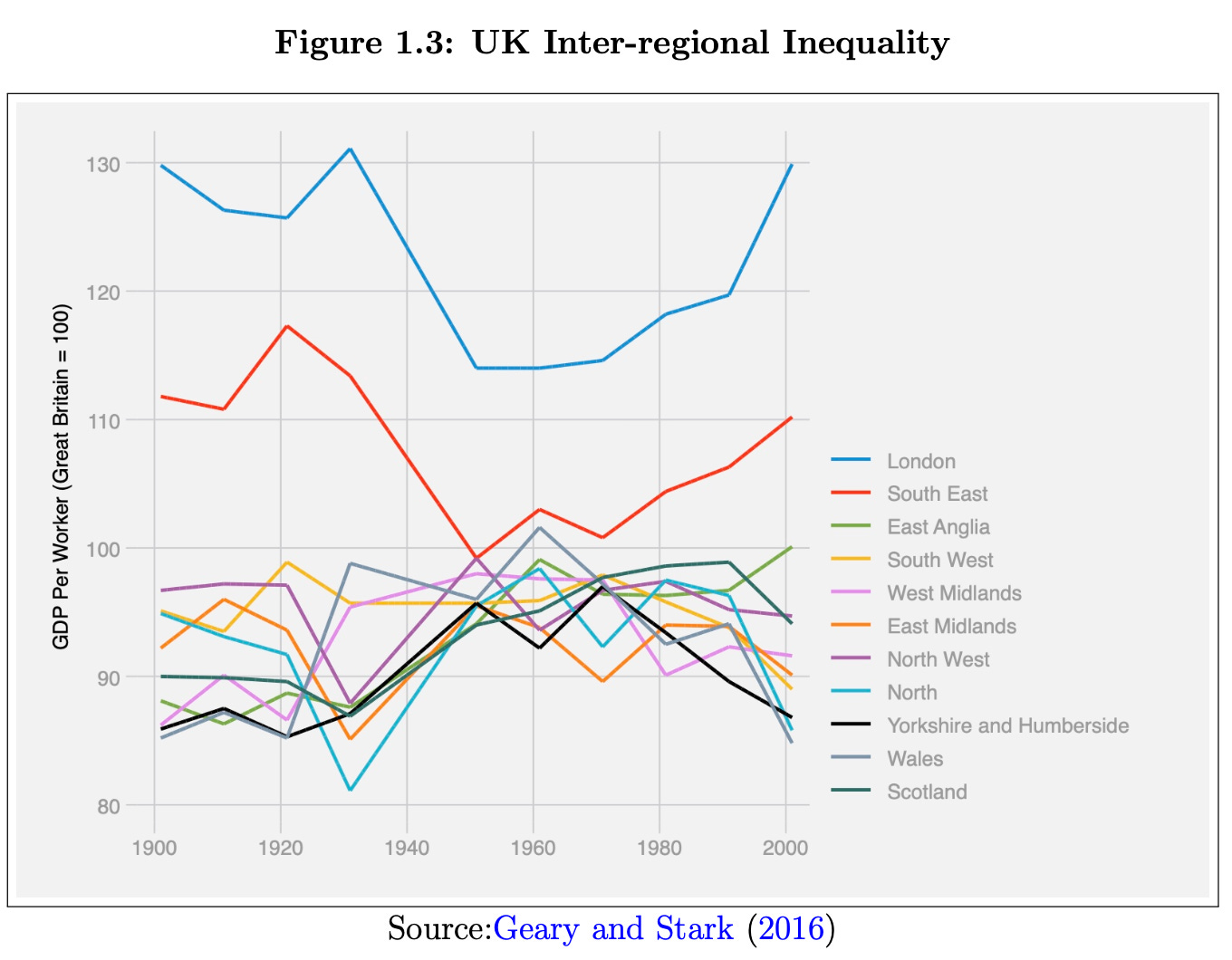
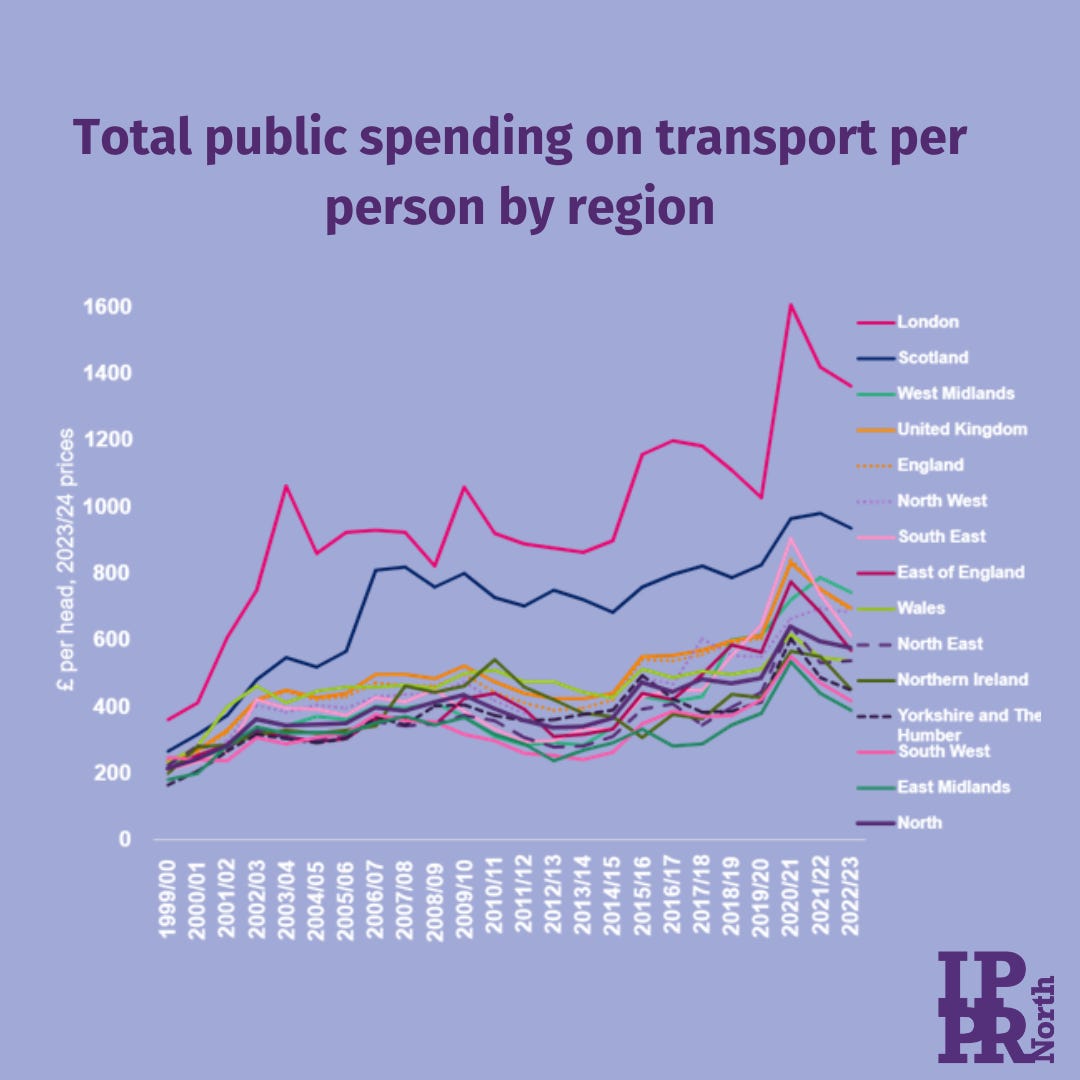
And the major reason we are worse off is power. We have the most centralised economy because we have the most centralised political system. The United Kingdom’s over-centralised political structure means infrastructure and policy decisions made in London largely benefit (those who travel to) London. Little infrastructure outside of London has led to little clustering outside of the capital. Local areas do not have the powers or funding to help redress this balance, while Westminster’s over-centralisation leads to little incentive to allocate spending to do so.
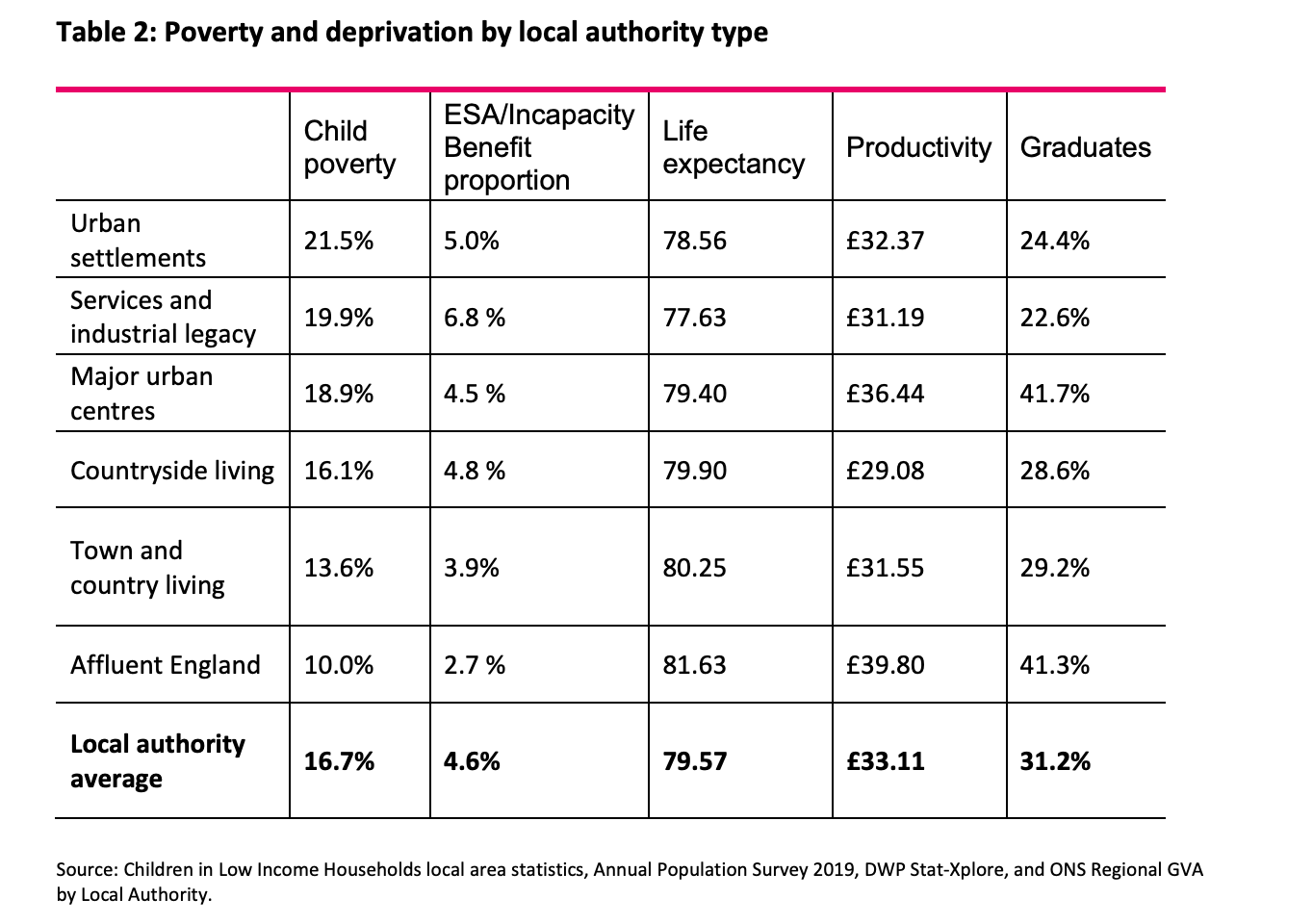
Places outside of London perform worse on most metrics that define a good life. They have lower life expectancy, employment rates, lower wages, fewer parks and galleries, less infrastructure spending and on it goes. The only area where London is deprived (compared to other regions) is housing costs. It’s rough outside of London.
Here’s a table I made earlier
How We Fix It
Devolution
The big reason we are so economically centralised is because we are so politically centralised. So we need to devolve power outside of London. A Number 10 in the North will help us get that power out of Westminster.
But the question is not just the what, but the how. We need to devolve power to economic geographies that match the size of local labour markets. That is why devolving power to city-region mayors makes the most sense - they can make decisions that benefit the whole local economy. That local leadership needs proper funding, not bidding for random pots.
And as I’ve seen in HMT (and worked on at NEF), we need to make sure when we devolve that power, we equalise the funding settlements too so that we don’t widen inequality with power. Letting areas keep more of their money without equalising means cementing inequality, not fixing it. That’s why Good Local Growth funds make sense.
Investment outside of London
London gets three times more in transport infrastructure spending per person than my region of the East Midlands. I honestly think I can just leave that there.
Creating Good Non-Graduate Jobs (everywhere)
There are not enough good jobs outside London, yes. But there are particularly not enough good non-graduate jobs. There is no point in creating lots of major city regions outside of London, if all of these don’t have enough good jobs for those not going to university. As things stand, around 40% of all full-time workers and a far higher proportion of non-graduates don’t earn enough (£35,000) for a decent life.
So we need to create a lot of good non-graduate jobs outside of London. For this to happen, the state needs to step in to help create them as the market will not. As I’ve covered before, we can (and are) creating these good jobs in building physical infrastructure, providing social infrastructure (like childcare), and employment programs (like Universal Basic Jobs for the Young and health/skills support à la Milburn) for those that are struggling.
Theatres, Galleries, Museums, and Parks
Places to go with your mates and places to go on dates. That is more than a nice to have, that is a crucial part of economic growth. Why? Because capital chases skills, that’s why. And if you don’t have a nice place to live, people will just move away. Directly, arts and culture spending has a relatively high multiplier rate (at 2.77 for employment) and so helps to create jobs. Indirectly, and far more importantly, greater arts and culture provision create a nicer place to live.
Areas that have levelled up successfully in other nations have ensured they created pleasant places to live. Building, for example, advanced manufacturing centres across the country will not work unless workers want to live within commuting distances of those areas.
Why we should fix it
Here’s the other thing. Making our country more equal helps us grow too. It is good for every place, because investment in more deprived areas means more growth without raising inflation. In post-industrial towns, more economic resources are sitting unused - more people can’t find a decent job (so are un/underemployed), more land is undeveloped, and towns are poorly connected to nearby cities. Investing to use these resources would create growth. That would make us all better off and help get our debt burden down. What’s not to like?
Conclusion
Andy’s right. Let’s create prosperity outside of London by devolving power away from London, creating good non-graduate jobs in every town and city, building more outside the capital, and more places to take dates/mates outside of London. That means more growth and prosperity for us all.
Politics is not a subtle sport
Thanks Jeevun for this excellent analysis.
One of the most important areas of non-graduate jobs is tradespeople. Herein lies a dilemma and one of the reasons why we are lagging in growth. Black market. Most traders (my guesstimate) want cash payments clearly with only one objective- to cheat the nation by not declaring full earnings to the inland revenue.
This also leads to another problem- that of second homes. Many tradespeople I know have second and indeed third homes. This then inflates the housing market making it impossible for young people to have affordable housing.
A lot of these issues are interconnected and I believe that Andy is the perfect person to take these head on, as he comes into government with very little baggage.
In addition to this, the problem that many economists don’t talk about, is the anti immigrant sentiment not only in the country but also at the highest echelons of the Home Office. As a result, those that can will (and are) relocate elsewhere and some even to their own home countries as some of them are beginning to thrive. Others will be reluctant to come here. Even the second and third generation young people born here have options of living somewhere that is welcoming and safe.
With falling birth rates any future estimates of economic growth are likely to be negative. Growth aside, the happiness of a nation depends on how easily it assimilates and celebrates newcomers.
You are too young to know the fear we lived through in the seventies. Such vile sentiments are quite openly expressed in society these days. Educated black and brown people may not yet feel this but talk to the low paid (but in vital services) and they will tell you how afraid they are of the future. If it can happen in USA it can happen here.
We need a leader who must extol the positives of immigration and vehemently oppose the right wingers. Without this, I am afraid, like Brexit, we will get a massive hit to our economic and social wellbeing. Keeping Mahmood as the Home Secretary will send a signal to the nation that we don’t care!
If more funds are to be distributed locally the incentives for corruption increase. There will be a need for the Audit Commission https://en.wikipedia.org/wiki/Audit_Commission_(United_Kingdom) to be brought back into existence.